
Top-tier Best Graphics Cards in 2023:
Graphics cards (aka GPUs) are one of the most important components in the constantly changing world of modern computing, taking the visual experience to new heights. For fans, gamers, and professionals alike, these potent processing units unlock the potential for high-quality images, fluid gaming experiences and effective content creation. As we venture into the year 2023, the graphics card market has reached new heights, with various companies offering cutting-edge GPUs boasting diverse specifications and performance levels. This in-depth review seeks to throw light on the top graphics cards currently on the market in 2023. Throughout this article, we will delve into the technical specifications, advantages, and prices of each graphics card, ensuring you can make an informed decision when considering your upgrade or new purchase. As we embark on this journey through the realm of top-tier graphics cards, we invite you to immerse yourself in the specifics, explore the technological developments, and consider the many possibilities that these GPUs can offer to your computing.
Let us now begin our exploration of some of the best and latest graphics cards in 2023, presenting the treasures of technology that lie within each, and paving the way for an exceptional computing experience that transcends visual boundaries.
- NVIDIA GeForce RTX 4090:
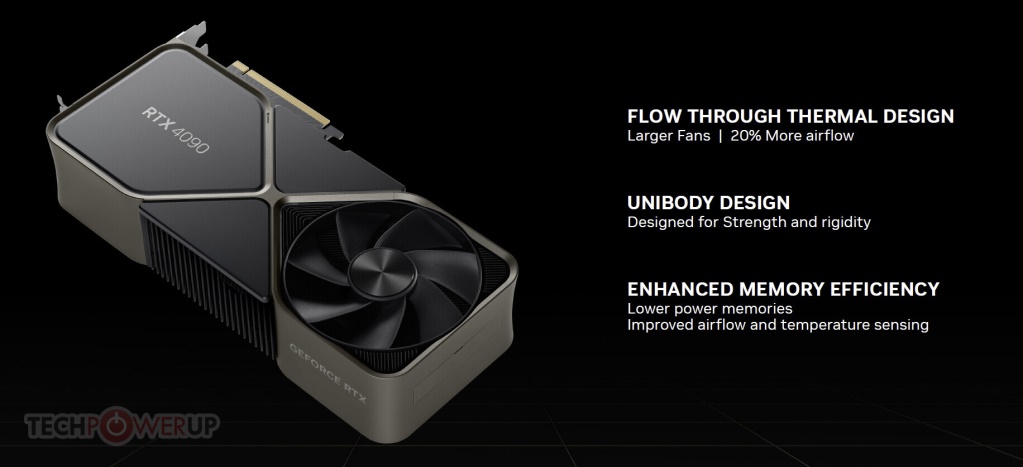
The NVIDIA GeForce RTX 4090 is the latest and enthusiast-class graphics card. Powered by the AD102 graphics processor in its AD102-300-A1 variant and built on the 5 nm processor, the GPU supports DirectX 12 Ultimate, ensuring seamless compatibility with all modern games. Additionally, its DirectX 12 Ultimate capability guarantees support for hardware ray tracing, variable-rate shading, and more in upcoming video games, delivering an immersive and visually stunning gaming experience. The potential for next-generation gaming and content production is unlocked by its cutting-edge technology, advanced ray tracing and AI features, and future-proof support for DirectX 12 Ultimate. It provides an unparalleled visual experience. Its memory type is 24GB DDR6X.
Pros:
Blistering Frame Rates: The GeForce RTX 4090 delivers exceptional gaming performance, offering blazing-fast frame rates even in demanding games and applications. Gamers can enjoy smooth and immersive experiences at high resolutions.
DLSS 3 Augmented Performance: NVIDIA's DLSS 3 technology significantly improves performance by leveraging artificial intelligence to upscale lower-resolution images in real time.
Excellent Ray Tracing Performance: The RTX 4090 excels in ray tracing, a cutting-edge rendering technique that enhances visual realism by simulating the behavior of light in real-world environments. Users can enjoy stunning reflections, shadows, and lighting effects in supported games.
Dual AV1 Encoders: The inclusion of dual AV1 encoders enhances video encoding efficiency, providing better compression and streaming capabilities for content creators
Calm, Still, and Sublime NVIDIA's Founders Edition design for the RTX 4090 not only has an aesthetic appearance but also contains effective cooling techniques. As a result, even during heavy workloads, the GPU is kept cool and silent.
Cons:
Bundled 12VHPWR Adapter is Ugly: The appearance of the bundled 12VHPWR adapter might not meet aesthetic preferences, potentially detracting from the overall visual appeal of the system.
Very High Power Draw: The RTX 4090 demands a significant amount of power due to its high-performance capabilities. This might necessitate a robust and efficient power supply, which can be costly.
Thick, Long GPU May Not Fit in All PC Cases: The physical size of the RTX 4090, with its thick and long form factor, may not be compatible with all PC cases. Users should check their case dimensions to ensure a proper fit.
Extremely High Price: Being an enthusiast-class GPU, the RTX 4090 is positioned at a premium price point, making it a considerable investment for users with budget constraints.
Bottlenecked Below 4K Resolution: In some circumstances, the RTX 4090's exceptional performance may be constrained by other system elements, leading to a bottleneck. When playing games at resolutions lower than 4K, the CPU or other system components may create a bottleneck.
Price: Its price is 1599 $ dollars now a day.
- NVIDIA GeForce RTX4080
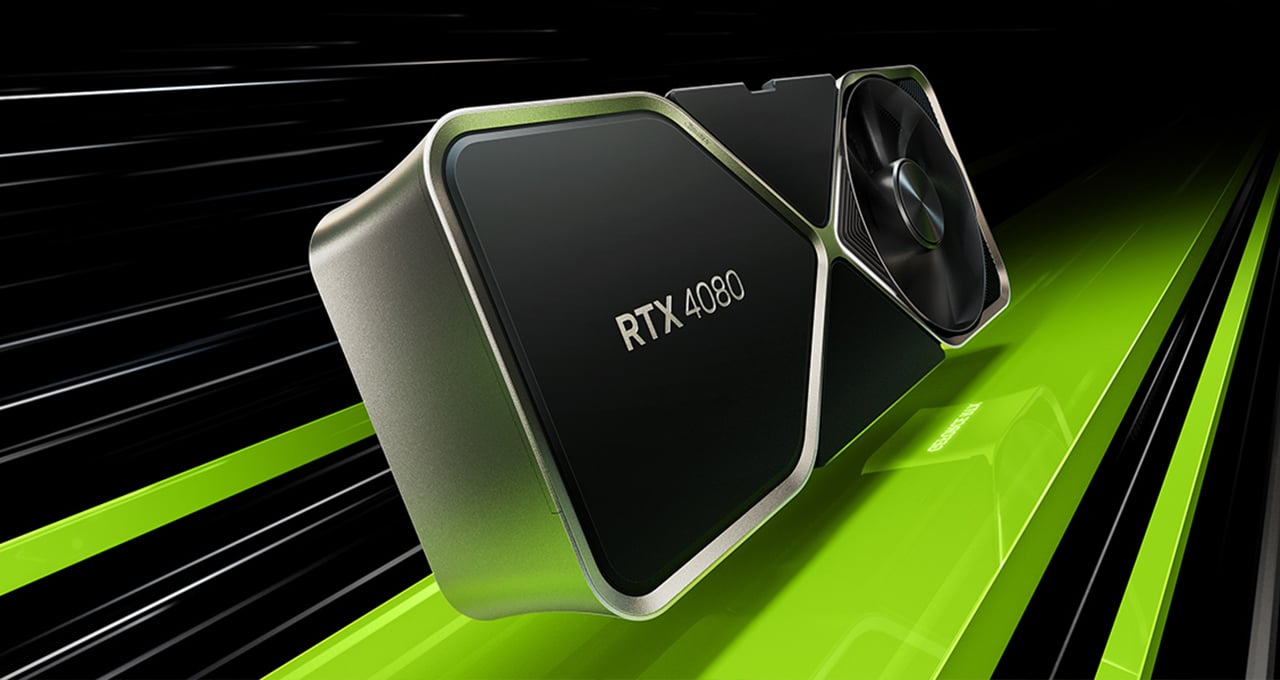
The RTX 4080 16GB card has a second-tier AD103 chip rather than the originally anticipated AD104 chip for the RTX 4080 12GB model. The RTX 4070-series card rather than a full-fledged RTX 4080 was thought to be more appropriate for the AD104.
Despite this mix-up, the AD103 GPU used in the RTX 4080 16GB card is still a powerful chip, featuring the architectural advancements seen in the top-tier RTX 4090 chip. This includes the fourth-generation Tensor Cores and third-generation RT Cores, both of which play crucial roles in accelerating AI-based tasks and real-time ray tracing, respectively. Additionally, the card benefits from the frame generation magic of DLSS 3, a technology that leverages AI to upscale lower-resolution images, resulting in improved performance and image quality.
It is essential to note that even though the AD103 GPU in the RTX 4080 16GB card is powerful, it may not contain the same level of individual components as the flagship AD102 chip found in the RTX 4090. The AD102 likely offers higher performance and additional features, making it the most capable and advanced GPU in the Ada Lovelace lineup.
Pros:
Top-notch performance The Nvidia GeForce RTX 4080 16GB is claimed to outperform both the RTX 3090 and 3080 Ti, making it an appealing choice for gamers and content creators who demand the best possible performance from their GPU. The high shader count, advanced architecture, and fast boost clock contribute to its impressive gaming and rendering capabilities.
Advanced Rendering Features: The inclusion of glitzy Frame Generation magic likely refers to the advanced rendering technologies exclusive to Nvidia's RTX series. These features include real-time ray tracing and AI-based rendering enhancements, allowing for more realistic lighting, reflections, and shadows in supported games and applications.
Well-optimized design: The RTX 4080 is described as a svelte and efficient GPU, indicating that NVidia has focused on power optimization. This ensures that the card delivers powerful performance without consuming excessive power, resulting in reduced heat output and potentially quieter operation.
Cons:
Overpriced: If the rumored price of $999 is accurate, some potential buyers might find the RTX 4080 to be overpriced, especially when compared to previous-generation GPUs or competitive offerings in the market. The price-to-performance ratio could be a concern for budget-conscious buyers.
Potentially Oversized: The mention of the card being oversized suggests that it may not fit in all PC cases. This could be a drawback for users with smaller or compact builds, as they might need to ensure compatibility before making a purchase.
Price: Its price is 1199$.
- AMD Radeon RX 7900 XTX
AMD Radeon RX7900, it would be designed to deliver top-tier gaming performance and support advanced technologies for an immersive gaming experience. Its feature is 6144 shades its Boost Timing: 2500 MHz 61.4 TFLOPs RAM: 24 GB GDDR6 Memory Clock: 20 GT/s Memory Bandwidth: 960 GB/s
Pros:
Superior 4K Performance: The GPU's high shader count, fast boost clock, and impressive TFLOPs make it much faster than an RX 6950 XT at 4K resolution. This means gamers can expect smooth and high-fidelity gaming experiences at ultra-high resolutions.
Power Efficiency: Despite its impressive performance, the GPU consumes less power compared to competing GPUs like the RX 6950 XT. This could be an attractive feature for users looking for top-tier performance without excessive power consumption, potentially resulting in lower electricity bills and less heat output.
Competitive Price Tag: At a $999 price tag, the GPU seems reasonably priced, considering its performance and features. This competitive pricing could make it an enticing choice for gamers seeking high-end performance at a relatively affordable price point.
Improved Ray Tracing Capabilities: The mention of much-improved ray tracing capabilities suggests that the GPU excels in rendering realistic lighting, reflections, and shadows in supported games and applications. This feature enhances visual fidelity and immersion in modern titles that utilize ray tracing technology.
Chiplets Technology: The use of "frickin' chipsets" indicates that the GPU could be leveraging an advanced multi-chip module architecture. Chiplets technology allows for increased performance and efficiency by dividing the GPU into smaller, specialized components.
Cons:
Not a Consistent RTX 4080 Competitor: The GPU is described as not being a consistent RTX 4080 competitor. This could mean that while it offers impressive performance and features, it might not match the capabilities of the top-tier RTX 4080 or other flagship GPUs.
Runs Hot: The mention of the GPU running hot indicates that it might have issues with heat dissipation under heavy loads. This could lead to thermal throttling, potentially affecting performance and overall user experience.
High Power Consumption: The GPU's TGP of 355W suggests that it consumes a significant amount of power, leading to higher energy consumption and heat generation. This could be a concern for users who prioritize power efficiency and have limited cooling solutions.
Low Average Clock Speed: The mention of a low average clock speed could imply that the GPU struggles to maintain high clock frequencies consistently. This may impact overall performance, especially in games or applications that rely heavily on clock speed.
Price: Its price is 899 $.
4. GIGABYTE GeForce GT 710 2GB
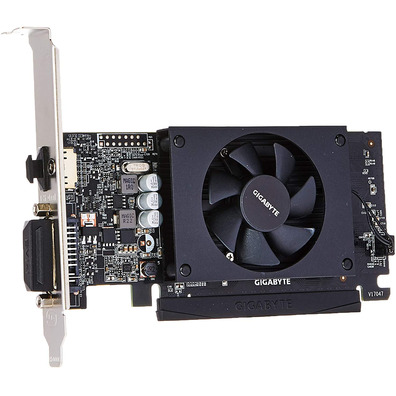
The graphics card features a single-slot active cooling system and a small form factor thanks to its simplistic design. The cooling system effectively dissipates heat from the GPU using a strong aluminum radiator with big fins. Additionally, a dedicated fan is in charge of controlling the temperatures to guarantee peak performance when working hard. The Display Port output of this graphics card is one of its most notable characteristics. This enables users to connect monitors with refresh rates of more than 100 Hz in addition to Super Ultra-Wide monitors. For video producers and gamers who need high-resolution displays with fluid images.
Pros:
Minimalist and unobtrusive design suitable for smaller form factor builds and HTPC (Home Theater PC) setups.
Overclocking capability for users who want to extract maximum performance from the GPU.
Efficient and quiet cooling system, maintaining low temperatures during operation.
Display Port output, enabling high-resolution and high-refresh-rate monitor support.
Supports the latest graphics technologies and APIs, ensuring compatibility with modern software.
Cons:
Limited to one HDMI connection, potentially restricting connectivity options for some users.
Some users may experience cooler noise during intense gaming sessions at high graphics settings, although this can vary based on individual system configurations and settings.
Price: Its price is 9200$.
5. MSI GeForce GTX 1650
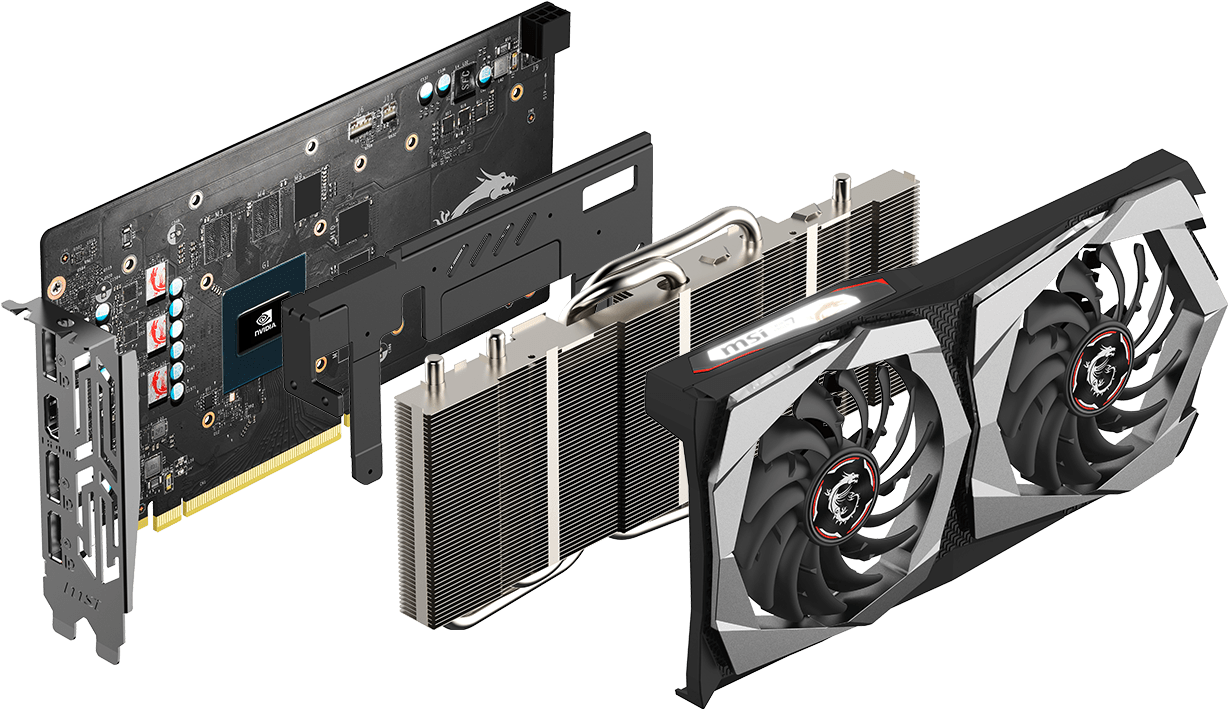
This graphics card is designed with a small form factor, measuring 168mm, and occupies two expansion slots. Its cooling system comprises a radiator and two 55mm fans with a curved impeller. The graphics processor operates at 1485 MHz by default, and it can boost up to 1665 MHz to deliver consistently high performance during usage. The card is equipped with 4GB of GDDR5 video memory, offering a substantial memory bandwidth of 128GB/sec. The core and memory frequencies of the card are set at 1695 MHz and 8000 MHz, respectively. The 4GB GDDR5 memory ensures smooth data transfer and enhances the card's performance in graphics-intensive tasks, making it suitable for handling heavy games and demanding applications.
Price: Its price is 154.99 US dollars.
Pros:
Suitable for handling heavy games and demanding applications.
Overclocking capability through the Afterburner utility, allowing users to push for higher performance.
Efficient cooling system, ensuring the card stays at optimal temperatures during operation.
Compact size and two-slot design, making it ideal for smaller form factor builds.
Offers support for high resolutions, including 8K displays.
Cons:
The cooling system may produce some noise during operation, which can be noticeable under full load.
Some users have reported experiencing heating issues when attempting to overclock the card significantly. This may require additional cooling solutions or adjustments to maintain stability.
Conclusion:
For this short review, we have compared the five latest Graphic Cards (NVIDIA GeForce RTX 4090, NVIDIA GeForce RTX4080, AMD Radeon RX 7900 XTX, GIGABYTE GeForce GT 710 2GB, and MSI GeForce GTX 1650) from four top GPU brands (NVIDIA, AMD, GIGABYTE and MSI) in terms of their pros and potential cons. From this short review, you might get a general idea of the key GPU performance parameters as well as some technical limitations; to help you in making an informed decision while looking for the best GPU for your system.
Comments (0)
No comments yet. Be the first to share your thoughts!
Leave a Comment
Your email address will not be published. Required fields are marked *