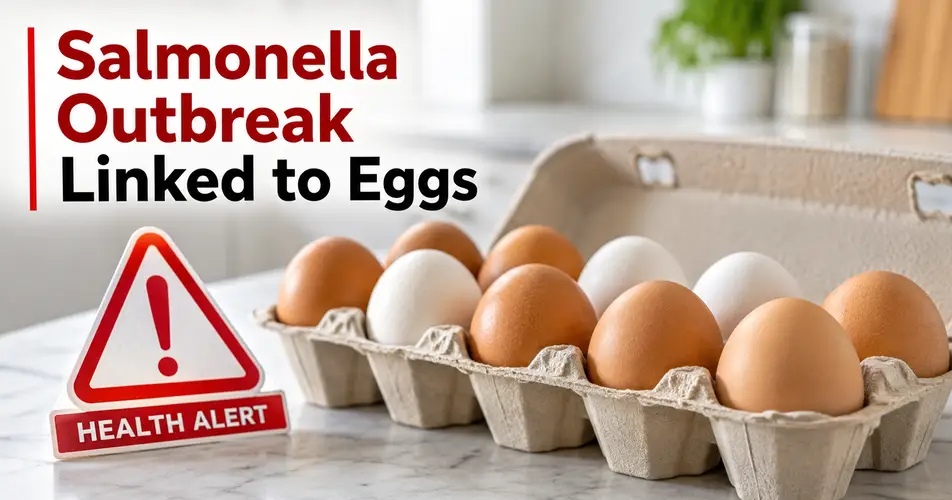

A Salmonella outbreak linked to eggs is receiving growing attention across the United States. Many people are now checking their refrigerators, searching for recalled egg brands, and wondering whether the eggs they recently purchased are safe to eat.
According to the latest official update, 98 people in 17 states have been infected with the outbreak strain of Salmonella. At least 26 people have been hospitalized, while no deaths have been reported. The illnesses began between November 21, 2025, and June 30, 2026. Health officials warn that the real number of illnesses may be higher because many people recover at home without being tested.
The outbreak has been linked, in part, to shell eggs produced and distributed by Midwest Poultry Services, L.P. The company recalled 1,589,577 dozen eggs because of possible Salmonella Enteritidis contamination. That equals more than 19 million individual eggs.
Here is what consumers need to know about the Salmonella egg recall, including the affected brands, carton codes, symptoms, states involved, and steps to protect their families.
What Happened in the Salmonella Egg Outbreak?
The Centers for Disease Control and Prevention, the Food and Drug Administration, and public health departments in several states are investigating a multistate outbreak of Salmonella Enteritidis infections.
During interviews with people who became sick, 40 out of 44 people said they had eaten shell eggs before their illness began. This means that 91 percent of the people interviewed reported eating eggs. Laboratory testing and product tracing also identified Midwest Poultry Services as a common egg source for some of the cases. Samples collected from farms in Texas tested positive for Salmonella. Whole genome sequencing found that some of these samples matched the strain identified in people who became sick. However, the FDA has explained that Midwest Poultry Services may not account for every illness connected to the outbreak. Officials are continuing their investigation to find out whether other sources may also be involved. As of the latest official update dated July 24, 2026, the investigation remains ongoing.
Which Eggs Have Been Recalled?
The egg recall includes certain white shell eggs and brown cage free shell eggs produced by Midwest Poultry Services.
The recalled products were sold in different package sizes, including cartons and bulk containers containing:
• 6 eggs
• 12 eggs
• 18 eggs
• 24 eggs
• 30 eggs
• 36 eggs
• 60 eggs
• Bulk packages for restaurants and food service businesses
The recalled eggs have sell by or best by dates between July 20, 2026, and August 17, 2026. They were produced in Texas and distributed from June 6, 2026, through July 3, 2026. Not every carton from these brands is included. Consumers must check the identifying information printed on the side of the carton.
Egg Brands Included in the Recall
The recalled eggs were sold under several familiar brand names, including:
• Kroger
• Simple Truth
• Brookshire’s
• Country Morning
• Cal-Maine Sunups
Some eggs were also sold in large bulk packages to restaurants, retailers, and other food service businesses. Because these brands sell many different egg products, shoppers should not assume that every carton under one of these names is recalled. The plant code, Julian date, and best by date are the most important details to check.
How to Check Whether Your Eggs Are Recalled
Take the egg carton out of your refrigerator and look at the information printed on either side.
The recalled cartons will show one of these plant codes:
• P-1950
• 0840962, sometimes printed as 840962
The carton must also have a Julian date between 157 and 184. The best by or sell by date will be between July 20, 2026, and August 17, 2026. A Julian date is a number used by food producers to show the day of the year when a product was processed. In this recall, dates from 157 through 184 are included.
Check all three details:
- The brand name
- The plant code
- The Julian date and best by date
A matching brand name alone does not confirm that the eggs are recalled.
What If the Original Egg Carton Is Missing?
Some people move eggs into a refrigerator tray or another container and throw away the carton. This makes it difficult to check the plant code and production date. The FDA advises consumers to throw away eggs if they no longer have the original packaging and cannot confirm whether the eggs are part of the recall. It is better to replace an uncertain carton than risk becoming seriously ill.
Do not try to identify contaminated eggs by looking at them. Salmonella contamination may not cause an obvious change in an egg’s appearance.
Where Were the Recalled Eggs Sold?
The recalled eggs were shipped to food service and retail customers in Texas, Oklahoma, and Louisiana. They were available to consumers at Kroger stores in Texas and Louisiana. They were also sold through Brookshire Grocery stores in Texas, Oklahoma, Arkansas, and Louisiana. Other smaller retailers and food service businesses may have received recalled eggs in these states, as well as Mississippi and New Mexico. Product distribution could extend beyond the confirmed locations, so consumers should rely on the carton information instead of location alone.
States Reporting Salmonella Cases
Illnesses connected to the outbreak have been reported in 17 states:
Arizona, California, Colorado, Georgia, Illinois, Louisiana, Michigan, Missouri, Mississippi, North Carolina, New Mexico, Nevada, New York, Oklahoma, South Carolina, Texas, and West Virginia.
It is important to understand that the states reporting illnesses are not the same as the confirmed product distribution states. A person may purchase or eat eggs while travelling, or products may move through restaurants and food service suppliers. The CDC also warns that an outbreak may affect more states than official numbers show because some people are never tested or reported.
What Should You Do With Recalled Eggs?
Do not eat recalled eggs, even if they look normal or have already been stored in your refrigerator for several days. Consumers should either throw the eggs away or return them to the place of purchase for a refund. Restaurants and retailers should not sell, cook, or serve any recalled eggs. After removing the eggs, clean any surfaces or containers that may have touched the carton or eggs.
This can include:
• Refrigerator shelves
• Egg trays
• Kitchen counters
• Bowls
• Cooking utensils
• Reusable shopping bags
• Hands and nearby food containers
Use hot, soapy water to clean surfaces and utensils. Items that are dishwasher safe can be cleaned in a dishwasher. Businesses should follow proper cleaning and sanitizing procedures before using affected storage or preparation areas again. Wash your hands carefully after handling the carton or throwing the eggs away.
What Is Salmonella?
Salmonella is a type of bacteria that can cause food poisoning. People can become infected after eating contaminated food or after touching a contaminated object and then touching their mouth or food. Eggs can become contaminated before the shell forms inside a hen, or bacteria can reach the egg through contact with contaminated surfaces. This is why an egg can appear clean and normal while still carrying harmful bacteria. Most people infected with Salmonella experience diarrhea, fever, and stomach cramps. Symptoms usually begin between six hours and six days after a person swallows the bacteria. The illness often lasts between four and seven days.
Some people recover without medical treatment, but others can develop serious illness.
Common Salmonella Symptoms
The most common Salmonella symptoms include:
• Diarrhea
• Fever
• Stomach cramps
• Nausea
• Vomiting
• Headache
• Loss of appetite
• Signs of dehydration
Symptoms may feel similar to a stomach virus or another form of food poisoning. This can make it difficult to know whether eggs or another food caused the illness. Think about what you ate during the previous six days and check whether any eggs in your home match the recalled products.
Who Is Most at Risk?
Anyone can develop a Salmonella infection, but some people have a greater risk of severe illness.
Higher risk groups include:
• Children younger than five
• Adults aged 65 and older
• People with weakened immune systems
• People receiving certain medical treatments
• People with serious long term health conditions
People in these groups may require medical care or hospitalization if an infection becomes severe. Families caring for young children, older adults, or someone with a weak immune system should take extra care when checking eggs and cleaning food preparation areas.
When Should You Contact a Doctor?
Contact a health care provider if you believe you ate recalled eggs and develop symptoms of Salmonella.
The CDC recommends seeking medical help promptly for serious warning signs, including:
• Diarrhea with a fever higher than 102 degrees Fahrenheit
• Diarrhea lasting more than two days without improvement
• Bloody diarrhea
• Vomiting that prevents you from keeping liquids down
• Very little urination
• A dry mouth or throat
• Dizziness when standing up
These symptoms may indicate a serious infection or dehydration. Do not take antibiotics or other prescription treatments without medical guidance. A health care professional can decide whether testing or treatment is needed.
Can You Make Recalled Eggs Safe by Cooking Them?
Cooking normally reduces the risk from bacteria in eggs. However, health officials are not advising people to cook and eat eggs included in this recall. The official advice is clear: recalled eggs should be thrown away or returned to the retailer. For eggs that are not included in the recall, the FDA recommends cooking eggs until both the white and yolk are firm. Foods containing eggs, such as casseroles, quiches, and frittatas, should reach an internal temperature of 160 degrees Fahrenheit, or 71 degrees Celsius. Recipes that use raw or lightly cooked eggs should be made with pasteurized eggs or pasteurized egg products. Examples include homemade mayonnaise, Caesar dressing, eggnog, cookie dough, and some homemade ice cream recipes.
How to Handle Eggs Safely at Home
The Salmonella outbreak linked to eggs is a reminder that basic food safety habits matter even when there is no active recall.
Keep eggs refrigerated and avoid leaving them on a counter for long periods. Do not purchase cartons containing cracked or dirty eggs. Wash your hands before and after handling raw eggs. Keep raw eggs away from foods that will be eaten without further cooking. Clean bowls, forks, whisks, counters, and other items that touch raw egg. Cook eggs thoroughly, especially when preparing meals for children, older adults, pregnant people, or anyone with a weakened immune system. Use pasteurized eggs when a recipe requires raw or undercooked egg. Do not wash eggs before storing them. Washing can spread bacteria around the sink and kitchen if it is not done correctly. Commercial eggs have already gone through regulated cleaning and handling processes.
Are All Eggs Unsafe Right Now?
No. The recall applies to specific egg products with matching plant codes, dates, brands, and package details.
Consumers do not need to stop buying or eating all eggs. Check the carton before use, follow safe cooking practices, and pay attention to updated information from health officials. Eggs that do not match the recalled plant codes and date range are not currently included in this specific recall.
Why Is This Egg Recall Important?
Eggs are eaten in homes, restaurants, schools, bakeries, hospitals, hotels, and care facilities. A single large shipment can reach many people through different stores and food service businesses. The recall covers more than 1.5 million dozen eggs, making quick consumer awareness especially important. People may also use eggs as an ingredient without realizing which brand or supplier provided them. That is why checking the full carton information matters more than simply looking at the brand or the store where the eggs were purchased.
Final Advice for Consumers
The Salmonella outbreak linked to eggs remains under investigation. The latest official figures report 98 illnesses across 17 states, including 26 hospitalizations and no deaths. More than 1.5 million dozen eggs have been recalled. Check your refrigerator for Kroger, Simple Truth, Brookshire’s, Country Morning, and Cal-Maine Sunups eggs. Look for plant codes P-1950 or 0840962, together with Julian dates from 157 through 184 and best by dates between July 20 and August 17, 2026. Do not eat any carton that matches the recall. Throw it away or return it to the store. Clean the refrigerator shelf, containers, utensils, and surfaces that may have touched the eggs.
Anyone experiencing serious diarrhea, high fever, bloody stool, repeated vomiting, or signs of dehydration should contact a health care provider.
Disclosure
This article is for general information and should not replace advice from a qualified medical professional. Official case numbers and recall details may change as the FDA and CDC continue their investigation.


Comments (0)
No comments yet. Be the first to share your thoughts!
Leave a Comment
Your email address will not be published. Required fields are marked *